

Plagiarism is one of the most serious issues in academic and professional writing. Intentional or accidental, plagiarism can have far-reaching consequences that affect your education, career, and reputation.
In the digital world, where information is easily accessible, the risk of plagiarism has increased. However, so has the ability to detect it. Institutions, employers, and publishers now use advanced tools to identify copied content, making it more important than ever to understand the consequences and avoid them.
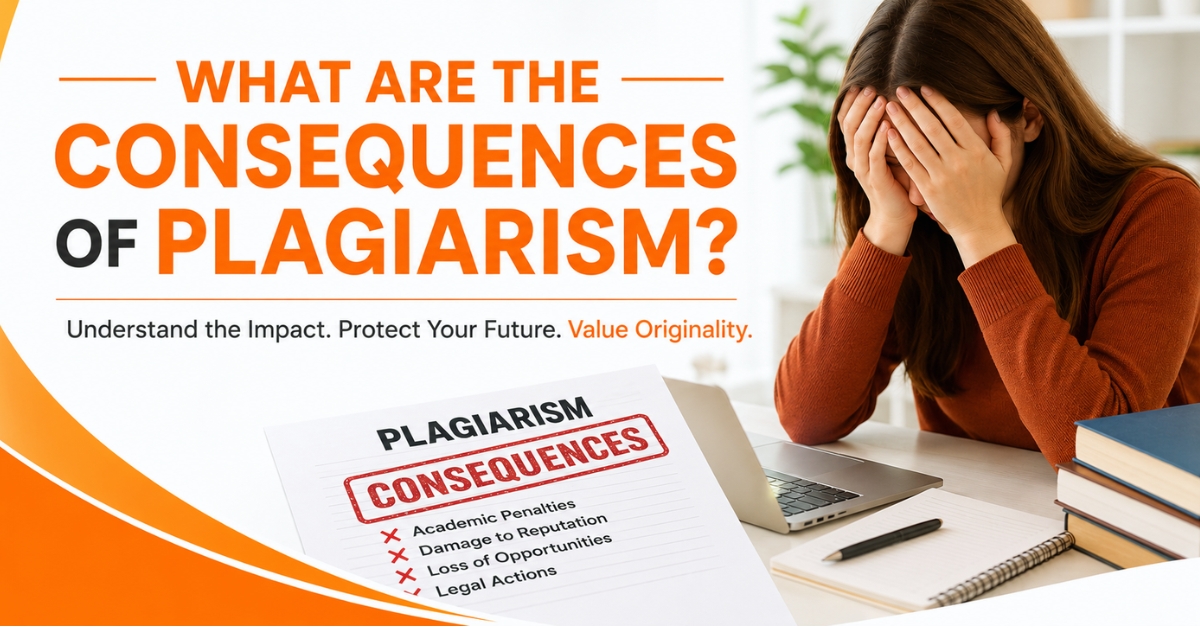
Plagiarism might seem like a quick solution when deadlines are tight, but it can lead to serious academic, professional, and even legal consequences.
This comprehensive guide explores the different types of plagiarism, its consequences across various fields, and how you can prevent it.
What Is Plagiarism?
Plagiarism is the act of using someone else’s work, ideas, or words without giving proper credit. It can occur in writing, research, presentations, or even creative work.
Plagiarism is not always intentional. Many students unknowingly commit it due to a lack of understanding about citations and referencing. However, institutions often treat both intentional and unintentional plagiarism seriously.
Types of Plagiarism
Many people assume plagiarism only means copying text directly, but it can take several forms, some of which are less obvious but equally serious.
Direct Plagiarism
This occurs when you copy someone else’s work word for word without using quotation marks or giving proper credit. It is the most obvious and serious form of plagiarism.
Self Plagiarism
This happens when you reuse your own previously submitted work without permission or acknowledgment. Even though it is your work, presenting it again as new is considered unethical in academic and professional settings.
Paraphrasing Plagiarism
Rewriting someone else’s ideas in your own words without citing the source still counts as plagiarism. Simply changing a few words or sentence structure does not make the content original.
Mosaic Plagiarism
This involves blending copied phrases or ideas with your own writing without proper citation. It can be harder to detect but still misrepresents the originality of your work.
Accidental Plagiarism
This occurs when you unintentionally fail to cite sources correctly, often due to lack of knowledge or improper referencing. Despite being unintentional, it can still lead to serious consequences.
Recognizing these types helps you stay aware of how plagiarism can occur and ensures that you maintain honesty and originality in your work.
Why Plagiarism Is Taken Seriously
Plagiarism undermines the purpose of education and professional work. Learning is about developing original ideas and critical thinking skills. When someone plagiarizes, they bypass this process and misrepresent their abilities.
It also disrespects the original creator’s effort and intellectual property. Writers, researchers, and creators invest time and effort into their work, and plagiarism takes away the credit they deserve.
Academic Consequences of Plagiarism
Plagiarism can have severe effects on students at all levels of education.
Failing Grades
Students may receive a zero on the assignment or fail the entire course.
Academic Probation
Repeated offenses can lead to warnings or probation.
Suspension or Expulsion
Serious or repeated plagiarism cases may result in removal from the institution.
Permanent Academic Record
Many institutions record academic misconduct, which can impact future studies.
Loss of Scholarships
Students may lose financial aid or scholarships due to academic dishonesty.
These consequences can disrupt a student’s educational journey and future plans.
Professional Consequences of Plagiarism
Plagiarism does not stop being an issue after school, it can be even more damaging in professional settings.
Job Loss
Employees caught plagiarizing may be terminated immediately.
Damage to Career
In fields like journalism, research, marketing, and content writing, plagiarism can end careers.
Loss of Professional Trust
Employers and clients may lose confidence in your work and reliability.
Blacklisting
Freelancers and professionals may be banned from platforms or industries.
In professional environments, originality and credibility are essential. Plagiarism directly threatens both.
Legal Consequences of Plagiarism
Plagiarism can also lead to legal trouble, especially when it involves copyrighted material.
Copyright Infringement
Using someone’s work without permission may violate copyright laws.
Lawsuits
Original creators can take legal action against plagiarism.
Financial Penalties
Courts may impose fines or require compensation.
Removal of Content
Plagiarized content may be taken down from websites, publications, or platforms.
Legal consequences vary depending on the severity, but they can be costly and damaging.
Impact on Reputation
One of the most lasting consequences of plagiarism is damage to your reputation.
Once you are known for plagiarism, it becomes difficult to regain trust. Academic institutions, employers, and peers may question your integrity and abilities.
Reputation takes years to build but can be destroyed in a single incident.
Psychological and Personal Consequences
Plagiarism can also affect you on a personal level.
Loss of Confidence
Relying on copied work can reduce your confidence in your own abilities.
Stress and Anxiety
Fear of being caught can create constant pressure.
Lack of Skill Development
Plagiarism prevents you from improving writing, research, and critical thinking skills.
Over time, this can limit your personal and professional growth.
Long-Term Consequences
The effects of plagiarism are not always immediate, they can follow you for years.
- Difficulty getting into universities or advanced programs
- Reduced chances of scholarships
- Negative impact on job applications
- Loss of professional opportunities
Even a single incident can have long-term consequences.
Real-World Examples of Plagiarism Consequences
Many public figures have faced serious consequences due to plagiarism.
- Students expelled from universities
- Journalists losing their jobs
- Authors facing legal action
- Politicians resigning from positions
These examples show that plagiarism can affect anyone, regardless of their level of success.
How Plagiarism Is Detected
Modern tools make it easier than ever to identify plagiarism.
Plagiarism detection software
Tools like Turnitin and Grammarly compare your content against large databases of academic papers, websites, and published materials to identify similarities.
Online databases and archives
Institutions have access to extensive digital libraries and previously submitted work, allowing them to cross check content for duplication.
AI based content analysis
Advanced systems can detect patterns in writing style, sentence structure, and phrasing, making it easier to identify paraphrased or slightly modified content.
Manual review by educators and editors
Experienced teachers and editors can often recognize inconsistencies in tone, vocabulary, or quality, which may indicate plagiarism.
Cross referencing and quick searches
Even a simple search of a sentence or phrase can reveal if it has been copied from an existing source.
Because of these methods, even minor similarities can be flagged. This makes originality and proper citation essential for maintaining academic and professional integrity.
How to Avoid Plagiarism
Avoiding plagiarism requires awareness, discipline, and the right habits. When you approach writing with a focus on originality and proper attribution, you can easily stay on the right track.
Understand citation rules
Learn how to properly cite sources using recognized formats such as APA, MLA, or Chicago. Knowing when and how to give credit is the foundation of avoiding plagiarism.
Use quotation marks correctly
Whenever you use someone else’s exact words, place them within quotation marks and include a proper citation. This clearly distinguishes original content from sourced material.
Paraphrase with understanding
Do not just change a few words. Read the original idea, understand it fully, and then rewrite it in your own words while still acknowledging the source.
Keep track of your sources
While researching, maintain a clear record of all references, links, and materials you use. This makes it easier to cite accurately later.
Use plagiarism checking tools
Before submitting your work, run it through reliable plagiarism checkers to identify any unintentional similarities and correct them.
Start your work early
Rushing increases the chances of mistakes and careless copying. Giving yourself enough time allows you to research properly, write thoughtfully, and review your work.
Develop your own voice
Focus on expressing ideas in your own way. The more you practice writing independently, the easier it becomes to produce original content.
By following these practices, you not only avoid plagiarism but also build strong writing skills and academic integrity that will benefit you in the long run.
Role of Teachers and Institutions
Educational institutions play a crucial role in preventing plagiarism by creating an environment that values honesty, originality, and ethical learning. Preventing plagiarism is not only about enforcing rules, it is about educating students and guiding them toward responsible academic practices.
Educate students about citation and ethics
Teachers should clearly explain what plagiarism is, why it matters, and how to properly cite sources. Early awareness helps students avoid mistakes and build strong academic habits.
Provide resources and support
Institutions can offer writing guides, citation tools, workshops, and access to plagiarism detection software to help students produce original work.
Enforce clear and consistent policies
Having well defined rules and consequences ensures that students understand the seriousness of plagiarism. Consistent enforcement also maintains fairness and accountability.
Encourage skill development
By focusing on research, critical thinking, and writing skills, educators help students feel more confident in producing their own work instead of relying on copying.
Promote a culture of academic integrity
When honesty is valued and reinforced across the institution, students are more likely to take ownership of their work and act responsibly.
At the same time, students share equal responsibility. By following guidelines, managing their time effectively, and asking for help when needed, they can avoid plagiarism and contribute to a more honest and respectful learning environment.
Plagiarism in the Digital Age
The internet has made information more accessible, but it has also increased the risk of plagiarism.
Copying content is easier, but detection is also more advanced. This makes originality more important than ever.
Students and professionals must adapt by developing strong research and writing skills.
Why Original Work Matters
Original work reflects your understanding, creativity, and effort.
It helps you:
- Develop critical thinking
- Build confidence
- Stand out academically and professionally
Originality is not just a requirement, it is a valuable skill.
When your task involves analyzing and evaluating texts, this guide on How to Write a Book Review can help you present your insights clearly and effectively.
Common Misconceptions About Plagiarism
Many people misunderstand plagiarism.
“Changing a few words is enough”
Simply replacing words or slightly altering sentence structure does not make the content original. If the core idea comes from another source and is not credited, it is still plagiarism.
“It is okay if it is from the internet”
Content found online is not free to use without acknowledgment. Websites, articles, and blogs are all protected by copyright and must be properly cited.
“I did not mean to plagiarize”
Lack of intention does not remove responsibility. Even accidental plagiarism can lead to penalties if proper citation rules are not followed.
“Common knowledge does not need citation”
While widely known facts may not require citation, specific ideas, interpretations, or unique explanations still need proper credit. When in doubt, it is always safer to cite the source.
“Using AI or tools makes it original”
Relying on tools without understanding the content can still lead to unintentional plagiarism. You are responsible for ensuring the final work is accurate and properly credited.
When your writing requires sharing personal experiences, this guide on How to Write an Autobiography can help you structure your story clearly and present it in a meaningful way.
Achieve Academic Success with Original Work and Write Essay Today
Plagiarism may seem like a shortcut, but it often leads to serious consequences. The better approach is to focus on learning, originality, and integrity. By developing your own ideas and giving credit where it is due, you not only avoid plagiarism but also grow as a student and professional.
Write Essay Today offers expert essay writing service and assignment writing services to support your needs. Get high quality, original, and well researched content delivered on time, so you can stay confident, meet deadlines, and focus on achieving academic success without the risk of plagiarism.