

A strong brag sheet can significantly improve your letters of recommendation, but most students don’t know what to include or how to present their achievements effectively.
Recommendation letters are a key part of applications for college, scholarships, internships, and leadership programs. However, teachers and counselors often write for many students and may not remember the specific details that make your profile stand out.
A well-structured brag sheet solves this by clearly outlining your academic achievements, extracurricular activities, personal strengths, goals, and growth. It helps recommenders write more detailed, personalized, and impactful letters that reflect your true potential.
In this complete guide, you’ll find a free brag sheet template, step-by-step writing tips, examples, and practical strategies to help you create a clear, organized, and compelling brag sheet.
What Is a Brag Sheet?
A brag sheet is a document students provide to teachers, counselors, coaches, or mentors to help them write recommendation letters. It includes academic achievements, extracurricular activities, leadership experiences, goals, personality traits, and personal reflections.
Think of it as a combination of:
- A personal summary
- A reflection document
- A recommendation support tool
Unlike a resume, a brag sheet is more personal and descriptive. It explains not only what you achieved, but also why it mattered and how those experiences shaped you.
College admissions advisors explain that brag sheets help recommenders include meaningful stories and examples rather than generic praise.
Why Is a Brag Sheet Important?
Many recommendation letters sound similar because teachers are often writing dozens of them within a short period.
A strong brag sheet helps your recommender:
- Remember specific examples about you
- Understand your goals and interests
- Highlight your strengths accurately
- Write more detailed and personalized letters
- Save time during the recommendation process
Brag sheets help teachers provide stronger context and write more thoughtful recommendation letters.
A good brag sheet can significantly improve the quality of your recommendation because it gives the writer material they might not otherwise remember.
Difference Between a Resume and a Brag Sheet
Students often confuse brag sheets with resumes, but they are different.
| Resume | Brag Sheet |
|---|---|
| Short and professional | More personal and reflective |
| Focuses on achievements | Explains experiences and growth |
| Bullet-point format | Narrative-style explanations |
| Used for jobs and internships | Used for recommendation letters |
| Objective tone | Personal tone |
A resume lists accomplishments. A brag sheet tells the story behind them.
When Do Students Need a Brag Sheet?
You may need a brag sheet when applying for:
- College admissions
- Scholarships
- Internships
- Leadership programs
- Summer programs
- Honors programs
- Student organizations
Most commonly, brag sheets are requested when students ask for recommendation letters.
Who Should Receive Your Brag Sheet?
You can provide your brag sheet to:
- Teachers
- School counselors
- Coaches
- Mentors
- Internship supervisors
- Club advisors
Ideally, give it to someone who knows you well and can speak honestly about your abilities and character.
Admissions experts repeatedly emphasize that strong recommendations come from people who genuinely know the student, not simply from prestigious individuals with weak personal connections.
What to Include in a Brag Sheet
A strong brag sheet should be organized, clear, and detailed without sounding exaggerated.
1. Basic Information
Start with essential details such as:
- Full name
- Graduation year
- School name
- Intended college major
- Colleges or programs applying to
This gives recommenders context about your goals.
2. Academic Achievements
Include:
- GPA
- Honors or AP classes
- Academic awards
- Research projects
- Competitions
- Certifications
Do not just list achievements; briefly explain why they mattered.
Example:
“Taking AP Biology strengthened my interest in healthcare and helped me develop stronger analytical skills.”
3. Extracurricular Activities
Mention:
- Clubs
- Sports
- Volunteer work
- Leadership positions
- Student organizations
- Community service
- Creative projects
Admissions guidance consistently notes that recommendation letters become stronger when they include specific examples and real involvement rather than vague praise.
4. Leadership Experiences
Colleges value leadership because it demonstrates initiative and responsibility.
Examples include:
- Club president
- Team captain
- Event organizer
- Peer mentor
- Volunteer coordinator
Explain:
- What you did
- What challenges you faced
- What impact you made
5. Personal Strengths and Traits
Choose 3–5 meaningful qualities that describe you.
Examples:
- Responsible
- Curious
- Creative
- Resilient
- Collaborative
- Disciplined
However, avoid simply listing adjectives without examples.
Instead of:
“I am hardworking.”
Write:
“I balanced part-time work with advanced classes while maintaining consistent academic performance.”
Specific examples always sound stronger and more believable.
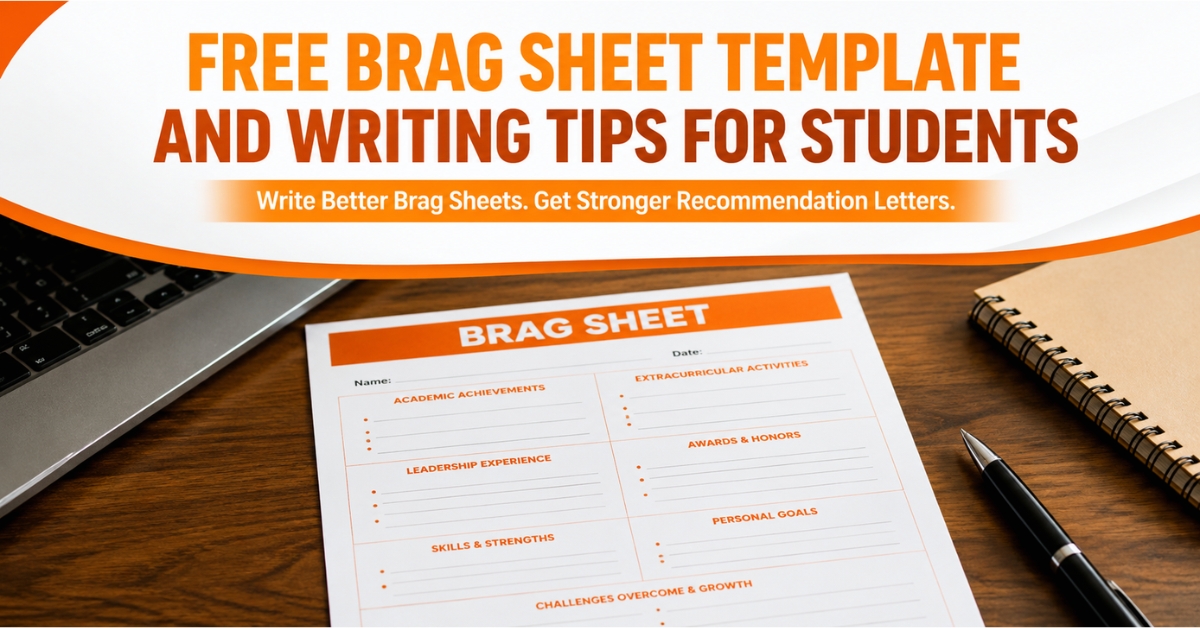
Free Brag Sheet Template for Students
Here is a simple and effective brag sheet template you can customize.
Student Information
- Full Name:
- School:
- Graduation Year:
- Intended Major/Career Goal:
Academic Achievements
- GPA:
- Honors/AP Courses:
- Awards or Recognitions:
- Favorite Academic Subjects:
- Most Meaningful Academic Achievement:
Extracurricular Activities
- Clubs and Organizations:
- Sports Participation:
- Volunteer Work:
- Leadership Roles:
- Work Experience or Internships:
Personal Strengths
List 3–5 qualities that describe you and provide examples for each.
Example:
Leadership: Organized a fundraising event that raised money for local shelters.
Challenges You Have Overcome
Describe any academic, personal, or social challenges that shaped your growth.
Career and College Goals
- Intended career path:
- Why you are interested in this field:
- Long-term goals:
Why You Chose This Recommender
Explain:
- Why you selected them
- What class or experience connected you
- What you learned from them
Additional Information
Include anything else you want highlighted in your recommendation letter.
Download Brag Sheet Template (.docx)
How to Write an Effective Brag Sheet
To create a strong and impactful brag sheet, it’s important to follow a clear and structured approach.
Be Honest
Do not exaggerate accomplishments.
Strong brag sheets sound authentic, not inflated.
Teachers can usually tell when students overstate achievements, and exaggerated claims may weaken credibility.
Use Specific Examples
Specific examples create stronger recommendation letters.
Weak:
“I helped other students.”
Better:
“I tutored struggling math students twice a week during junior year.”
Specific details make your experiences memorable.
Reflect on Growth
One of the most powerful things you can include is personal growth.
Discuss:
- Challenges overcome
- Skills developed
- Lessons learned
- Areas where you improved
Admissions officers often value growth and resilience as much as achievement itself.
Keep It Organized
Use headings and sections so recommenders can quickly find information.
A messy brag sheet makes the recommendation process harder.
Write Naturally
Avoid trying to sound overly impressive.
Natural writing feels more genuine and trustworthy.
Instead of:
“I possess exceptional leadership capabilities.”
Write:
“Leading our robotics team taught me how to communicate better under pressure.”
Clear writing is stronger than forced sophistication.
Common Mistakes Students Make
Here are some common mistakes that can reduce the effectiveness of your brag sheet.
1. Treating It Like a Resume
A brag sheet should include reflection and context, not just lists.
2. Being Too Generic
Avoid vague statements like:
- “I work hard.”
- “I am passionate.”
- “I am dedicated.”
Support qualities with examples.
3. Including Too Much Information
Do not overwhelm the recommender with unnecessary details.
Focus on meaningful experiences.
4. Forgetting Personal Stories
Stories help recommendation letters feel authentic and memorable.
5. Waiting Until the Last Minute
Give recommenders enough time.
Experts generally recommend requesting recommendation letters at least a month before deadlines.
How Long Should a Brag Sheet Be?
Most brag sheets are:
- 1–3 pages long
- Clear and organized
- Easy to skim
Longer is not always better.
Quality matters more than quantity.
Writing Tips for Students
The following tips will help you present your ideas clearly and make your brag sheet more impactful.
Start Early
Do not wait until application deadlines approach.
Start collecting:
- Activities
- Awards
- Volunteer experiences
- Achievements
- Reflections
throughout high school.
Think Beyond Academics
Admissions officers also care about:
- Character
- Leadership
- Initiative
- Community involvement
- Personal growth
A strong brag sheet shows who you are beyond grades.
Match Your Application Story
Your brag sheet should support your broader application narrative.
For example:
- Future engineering student → highlight problem-solving and STEM experiences
- Future healthcare student → emphasize empathy and volunteer work
Consistency creates a stronger overall application.
Customize for Different Recommenders
Different recommenders know different sides of you.
For example:
- Teacher → academic strengths
- Coach → leadership and teamwork
- Counselor → personal growth and involvement
Tailoring your brag sheet helps recommendation letters feel unique rather than repetitive.
Admissions consultants specifically warn against sending identical brag sheets to every recommender because it can result in repetitive letters.
Example of a Strong Brag Sheet Entry
The following example shows how to present your experiences in a more detailed and meaningful way.
Weak Version
“I was part of the debate club and volunteered.”
Improved Version
“As a debate club member, I improved my public speaking and analytical thinking skills by competing in regional tournaments. Through volunteering at a local food bank, I learned the importance of community involvement and teamwork.”
The second version sounds more thoughtful and specific.
Questions Teachers Often Ask in Brag Sheets
Some schools provide official brag sheet forms.
Common questions include:
- What are you most proud of?
- What challenges have you overcome?
- What are your future goals?
- What qualities best describe you?
- Why did you choose this recommender?
- What should colleges know about you?
These reflective questions help teachers write more detailed and personal letters.
To improve your research methods, don’t miss our detailed guide on internal vs. external validity.
How to Ask for a Recommendation Letter Professionally
When requesting a recommendation:
- Ask politely
- Ask early
- Provide deadlines clearly
- Include your brag sheet
- Thank the recommender afterward
Example Request
Hi [Teacher Name], I hope you’re doing well. I really enjoyed being part of your class and was wondering if you would feel comfortable writing a recommendation letter for my college applications. I’ve attached my brag sheet to help provide more context about my activities, goals, and experiences. Thank you for considering my request.
Professional communication leaves a positive impression.
Why Specific Stories Matter
Strong recommendation letters usually include:
- Personal anecdotes
- Classroom moments
- Leadership examples
- Growth stories
Specific stories make students memorable.
Admissions experts repeatedly emphasize “show, don’t tell” examples rather than generic praise.
For example:
Weak:
“Sarah is responsible.”
Better:
“Sarah consistently stayed after class to help classmates struggling with assignments.”
Stories create stronger emotional impact.
Digital vs Printed Brag Sheets
Most schools now prefer digital brag sheets because they are easier to organize and share.
Common formats include:
- Google Docs
- Word documents
Always use professional formatting and readable fonts.
Final Checklist Before Sending Your Brag Sheet
Before sharing your brag sheet, make sure:
- Information is accurate
- Grammar and spelling are correct
- Sections are organized clearly
- Examples are specific
- Tone sounds authentic
- Deadlines are included
- Contact information is updated
Proofreading matters because careless mistakes can reduce professionalism.
To improve the quality of your research, don’t miss our guide on sampling methods in research.
Write Essay Today: Academic Writing Support for Students
A brag sheet is more than just a list of accomplishments. It is an opportunity to help recommenders understand who you are, what you value, and how you have grown throughout your academic journey.
Strong brag sheets combine achievements with reflection, personal stories, and meaningful examples. By being honest, organized, and specific, you can help teachers and counselors write recommendation letters that feel authentic, detailed, and memorable.
Most importantly, remember that the best brag sheets are not about sounding perfect; they are about presenting a genuine and thoughtful picture of yourself.
At Write Essay Today, we provide a reliable essay writing service designed to support students with academic writing, college application guidance, personal statements, and structured educational content.